Locker Financial Services LLC Newsletter
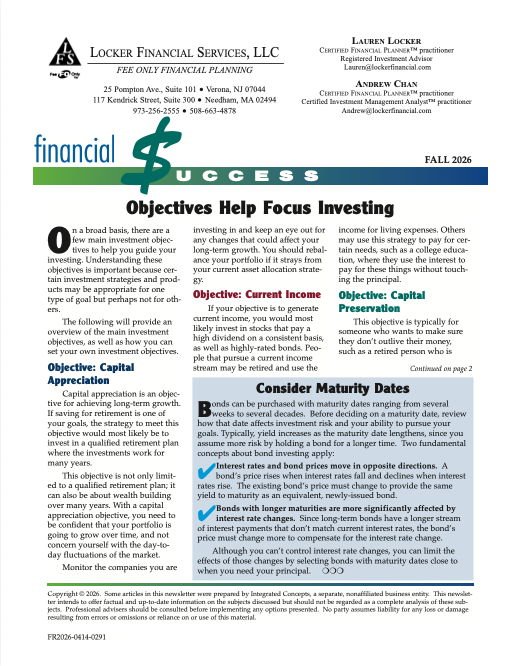

The Fall 2026 newsletter focuses on setting clear investment objectives, reminding readers that the right strategy depends on what the money is meant to do. It outlines three core objectives: capital appreciation for long-term growth, current income for living expenses or specific needs, and capital preservation for those who can’t afford to recoup losses. From there, it walks through goal-based investing, using SMART goals and time horizons to turn life priorities into a workable plan.
The issue also clears up common myths about bonds. It explains that bonds carry real risk, still play a valuable role in diversification, and differ meaningfully from bond funds. A companion piece on maturity dates shows how interest rates and bond prices move in opposite directions. Additional articles define good debt versus bad debt and offer guidance for the sandwich generation, covering parents’ retirement income, long-term care, estate planning, and college savings. A closing roundup of recent surveys highlights growing retirement anxiety, especially among Gen X. Throughout, the message stays consistent: clearly defined goals, guided by a trusted financial advisor, form the foundation of a confident financial future.
Subscribe To Our Newsletter
"*" indicates required fields

Pandemic Fallout and Economic Realities Force Americans to Rethink Early Retirement Dreams
Financial stress from the pandemic has caused 73% of Americans to change their retirement plans, pushing the average retirement age from 62 to 65. Inflation and a bear stock market have led to increased living costs and reduced savings, forcing people to reassess their retirement goals. The illusion of an easy early retirement has been shattered, highlighting the need for better financial preparation. Read Lauren Locker’s Contribution

Tips for weathering the financial challenges that Covid created
The recent Covid pandemic has created a plethora of financial crises for young and old alike. In this AARP article, Lauren shares her insights about how to react if you find yourself in a tenuous position with your current employer. Collecting unemployment benefits and delaying a retirement decision may give you time to evaluate all of your options.

Working with your older parents on an estate plan – why it’s so crucial
According to a recent Gallup poll, only 46% of people have written a will. An even smaller percentage have put legal documents in place to protect them in case of incapacity. In this article, published in The Balance, Andrew explains how to approach the subject with your aging parents and why doing so can be so important to their well-being as they age.

Nervous about the state of your state pension? Advisors can help
Many state employees across the nation has watched with trepidation as their governors and legislatures struggle to shore up sagging pension systems. Andrew and other advisors offer their insights into how to deal with your worst pension fears in this Financial Advisor article.

10 Financial Commandments for Your 20s
Young people in their 20s have plenty on their plates, and it’s easy to let financial issues slide to the bottom of the “to do” list. But, as Lauren and other advisors point out in this Kiplinger article, getting on the right financial path early will make it easier for 20-somethings to realize their career and personal dreams.

How to (Gently) Help Your Aging Parents Manage Their Money
A recent New York Times article highlighted the difficulties that adult children can encounter when trying to help their aging parents manage their finances. It can be especially challenging if the parents are still mentally sharp or if they are resistant to accepting help See what tips Lauren offered for coping with this complicated and emotionally-charged family financial issue.
Debt Issues and Aging Parents – a combustible combination
Talking to your parents about their finances can be a difficult undertaking in the best of circumstances. But what if you suspect that they have accumulated debt or have fallen prey to a scam? How do you work with them to prevent a financial emergency? In this article, published in The Balance, Andrew discusses the best strategies for approaching this hot topic in a non-confrontative way.